


A quality AV receiver anchors your home theater, handling video switching, surround sound decoding, and amplification in one box. This guide covers what changed this year, which models suit different budgets and needs, and how to avoid the most common buyer mistakes.
What we recommend



What changed in 2026 AV receiver technology
The shift in 2026 is subtle but meaningful: AV receivers are no longer just HDMI switching hubs for movies. Manufacturers now position them as central entertainment platforms that handle gaming, streaming, multiroom audio, and home integration as equally important roles. New Yamaha models like the RX300A and RX500A arrive with redesigned chassis, LE Audio Bluetooth support, and revised cosmetics. Denon's 2026 X Series AVRs now feature 32-bit 8-channel DAC architecture and precision clocking for lower jitter across all channels. Onkyo introduced new product lines at CES 2026. Across brands, immersive audio (Dolby Atmos, DTS:X) remains standard, but room correction algorithms have become more sophisticated. The practical takeaway: if you bought five years ago, today's receivers pack more power per dollar, handle 4K/120Hz gaming reliably, and integrate wireless speakers more seamlessly.
🔥 Top deals
Real products from the brands in this guide — price as the store listed it
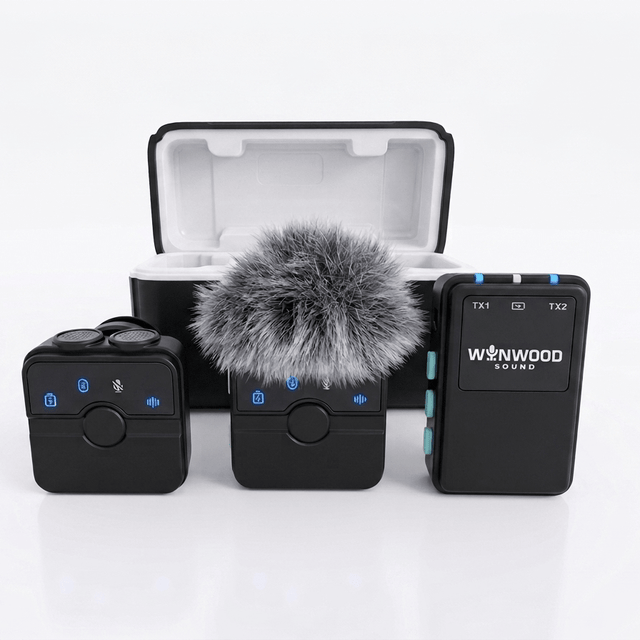 Wynwood Sound
CreatorMic Plus voice-enhancing mini wireless microphones and battery case for iPhone, Android & Cameras
$69.99
Shop now →
Wynwood Sound
CreatorMic Plus voice-enhancing mini wireless microphones and battery case for iPhone, Android & Cameras
$69.99
Shop now →
 Wynwood Sound
PowerShutter™ Power Bank Stand
$39.99
Shop now →
Wynwood Sound
PowerShutter™ Power Bank Stand
$39.99
Shop now →
 Wynwood Sound
HaloGlow™ Magnetic Phone Light
$24.99
Shop now →
Wynwood Sound
HaloGlow™ Magnetic Phone Light
$24.99
Shop now →
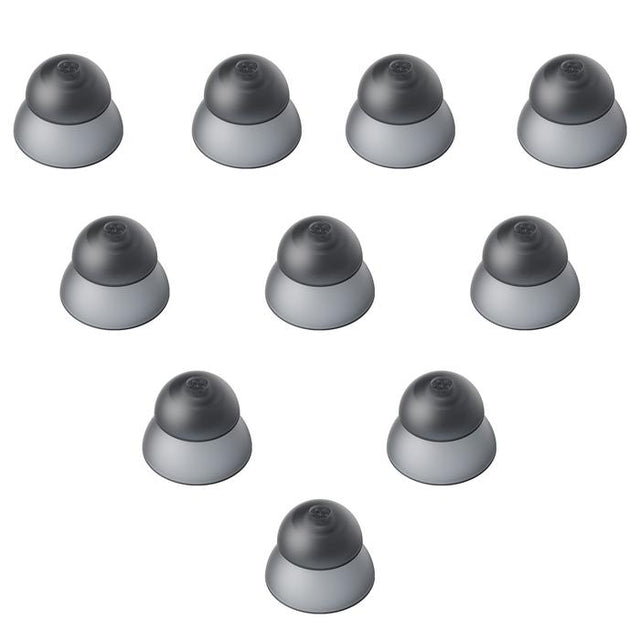 Yeasound
Power Domes for Hearing Aid*2(20 pcs)-S/M/L
$25.99
Shop now →
Yeasound
Power Domes for Hearing Aid*2(20 pcs)-S/M/L
$25.99
Shop now →
 Yeasound
Closed Domes for Hearing Aid*2 (20 pcs)-S/M/L
$25.99
Shop now →
Yeasound
Closed Domes for Hearing Aid*2 (20 pcs)-S/M/L
$25.99
Shop now →
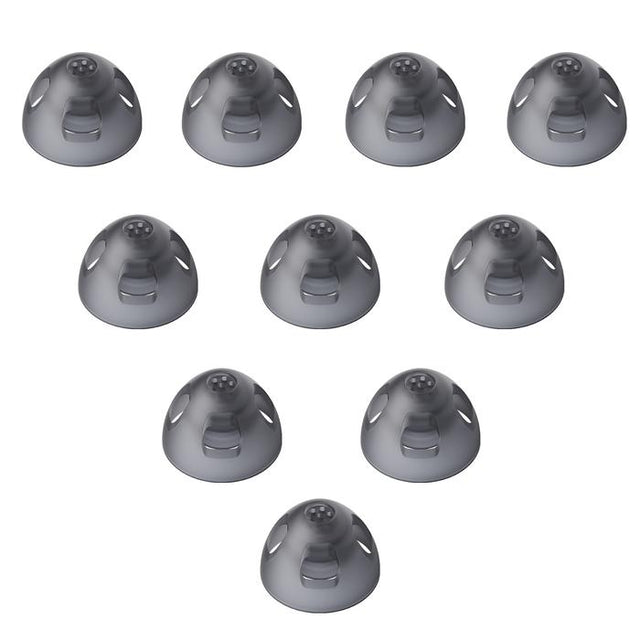 Yeasound
Open Domes for Hearing Aid*2(20 pcs)-S/M/L
$25.99
Shop now →
Yeasound
Open Domes for Hearing Aid*2(20 pcs)-S/M/L
$25.99
Shop now →
Who each kind of receiver suits best?
Budget receivers under $400 suit small rooms, stereo-first listeners, and those upgrading from a soundbar. Entry models deliver real Dolby Atmos and 5.2 channel processing—enough for a convincing surround experience. Mid-range models ($500–$1,000) are the safest choice for most buyers: they combine solid amplifier power (80–100W per channel), reliable room correction, full HDMI 2.1 gaming support, and enough speaker connections to grow later. Premium receivers ($1,500+) appeal to audio perfectionists, custom installers, and those building reference-quality home theaters where every dB and every hertz matters. Casual movie watchers rarely hear the difference above the $800 mark. Music listeners benefit more from higher-tier models due to superior stereo imaging and lower distortion. Gamers should prioritize HDMI 2.1 features (VRR, ALLM, 4K/120Hz passthrough) regardless of price tier.
- Budget: 5.2 Dolby Atmos, 8K HDMI, basic room correction
- Mid-range: 7.2 channels, advanced calibration (Audyssey, YPAO), HDMI 2.1 gaming
- Premium: Hand-tuned circuits, reference-grade amplification, advanced sound processing
Best pick for most people: the mid-range sweet spot
For the majority of buyers, a 7.2-channel receiver in the $600–$900 range delivers the best return on investment. Models like the Yamaha RX-V6A (roughly $645) strike an honest balance: 7.2 channels with Dolby Atmos, 100W-per-channel amplification, full 8K HDMI support, MusicCast wireless multiroom, and calibration tools that work in real rooms. The Denon AVR-S770H sits near $600 and brings Audyssey room correction, which rivals more expensive systems. Yamaha's RX-A4A costs closer to $1,250 but remains popular among music enthusiasts for its stereo performance and proven reliability. At this level, what you gain is not raw power but better amplifier headroom, quieter operation, more thoughtful connectivity, and calibration systems that actually improve your listening space rather than just applying a preset. Avoid paying extra for features you will not use—if you do not have a second zone or wireless speakers, skip those buttons.
Best pick on a tight budget: real immersive sound under $400
If you need a receiver right now and budget is tight, the Yamaha RX300A delivers surprising value under $400. It offers genuine Dolby Atmos processing, 5.2-channel capability, 8K HDMI passthrough, and Bluetooth multipoint connectivity—features that belonged to $600+ models just three years ago. For even tighter budgets, look for last-generation models: a year-old mid-range receiver often sells for 30–40% less and still outperforms a new entry-level unit. Denon and Marantz routinely discount older stock when new SKUs launch. The catch at the budget end is amplifier power (usually 50–70W per channel rather than 100+) and more basic room correction. These limits matter less if your room is small or your speakers are already efficient. Budget receivers also typically offer fewer HDMI inputs and no high-end touches like wireless surround integration. Acceptable compromise: if you plan to upgrade speakers later, start with an affordable receiver and invest heavily in front-left and center speakers—those are your foundation.
Pick when you want premium features: Marantz Cinema and audiophile circuits
When price is less important than sound quality, receivers in the $1,500–$2,000 range enter reference territory. The Marantz Cinema 60 is the classic choice: it combines 7.2-channel processing with hand-tuned Shirakawa circuitry and HDAM amplifier modules that deliver a warm, detailed sound quality audiophiles genuinely prefer. Marantz receivers sound different—smoother high frequencies, richer midrange—compared to the clinical precision of some Denon models. For pure gaming and multiroom audio, the higher-end Denon AVR-X series adds wireless Denon Home speaker integration, Dirac Live room correction (superior to Audyssey in accuracy), and THX certification. Onkyo's TX-RZ50 brings 11-channel processing, Dirac Live calibration, and full HDMI 2.1 features—a real alternative if you value flexibility over brand name. Premium models include longer warranties (often five years), better customer support, and more robust amplifier design that runs cooler under stress. They also weigh more and run hotter—make sure your cabinet has airflow.
Specs and materials that actually separate these options?
Channel count matters only to the extent your room and speaker budget support it: 5.2 suffices for most rooms; 7.2 is the typical sweet spot; 9.2 and above only pay off in large open-plan spaces. Amplifier power (watts per channel) matters, but only if your speakers are inefficient—most passive speakers in home theater are 87dB or higher sensitivity, meaning 60W and 100W sound almost identical in practice. What matters far more is amplifier current delivery (measured in amps, not watts) under low impedance; this affects how cleanly it handles dynamic peaks. HDMI 2.1 is essential for gaming; without VRR, ALLM, and 4K/120Hz passthrough, your new console feels held back. Room correction varies significantly: Audyssey (Denon, Marantz) and YPAO (Yamaha) are industry-standard and effective; Dirac Live (higher-end Denon, Onkyo) costs more but measures flatter. DAC quality correlates with price—budget models use 24-bit chips; premium models use 32-bit architectures with lower jitter. Phono inputs matter only if you own a turntable. HDMI input count: ensure at least four inputs so you can leave cables connected to gaming, streaming, and Blu-ray devices without swapping.
- Power: 80–100W per channel sufficient for most home theaters
- HDMI 2.1: Required for 4K/120Hz gaming and VRR/ALLM features
- Room correction: Audyssey and YPAO adequate; Dirac Live worth the premium
- Connectivity: Minimum four HDMI inputs, Wi-Fi, Bluetooth, optical audio
- DAC quality: 32-bit architecture in premium models reduces audible jitter
What is safe to skip, and where marketing overstates the benefit?
Wattage claims are often misleading: a receiver advertised as "150W per channel" typically delivers 150W into a 6-ohm load at 1kHz with only one channel driven—not how you listen. Real-world power (20Hz–20kHz, 8-ohm load, two channels driven, <0.1% THD) is usually 70–90% of advertised. Skip this spec fight; instead listen to reviews comparing how loud and clean your favorite models play in real rooms. Skip multizone amplification if you only watch movies in one room—it is rarely worth the extra cost and complexity. Wireless rear speakers sound appealing but are overkill for most buyers; wired surrounds are simpler and always reliable. Height virtualization (simulating overhead Atmos without real ceiling speakers) is a marketing feature—it does not replace actual height speakers, though it is better than nothing. Avoid receivers with fewer than four HDMI inputs: expansion via USB switch boxes creates unwanted complexity and latency. Phono inputs only matter if you own an analog turntable and want volume control built into the receiver; few do. Ignore "HD Audio" labels on the box; they are meaningless. Bluetooth version numbers above 5.0 matter only for multipoint connectivity and low-latency codecs—for normal playback, 5.0 is fine.
How to save money: when prices drop and what codes realistically cover?
AV receiver prices drop predictably: new models launch in September–October, and previous-generation stock clears from July through September at discounts of 20–40%. The best buying window is August–September when retailers are clearing shelf space for new arrivals. Seasonal promotions around Black Friday (November) and Boxing Day (December) offer 15–25% discounts but not always the lowest prices—the spring clearance (April–June) is often better. Manufacturers periodically offer instant rebates ($50–$150 off) when launching new SKUs; watch brand websites, not deal aggregators, for official promotions. What about discount codes? Realistic codes cover 5–10% at most legitimate retailers; anything claiming 30%+ is either expired, restricted to new customers, or stacked with steep markup. Use codes only on full-price items from major retailers—they are most effective on mid-range models where margins are highest. Buying last year's model saves more than chasing codes on this year's entry-level unit. If you wait 18 months after a receiver launches, you can expect 30–40% off retail. Avoid impulse purchases around launch; patience pays better.
Mistakes shoppers make, and how to avoid them?
The most common mistake is buying too many channels without supporting speakers: a 9.2-channel receiver sounds no better than a 5.2 if your room only has front-left, center, and front-right speakers. Channel count is only useful if you have the physical space and budget to fill those channels with real speakers. Second mistake: trusting wattage ratings over listening distance and room acoustics. A 50W receiver in a small, treated room sounds louder and cleaner than a 150W budget model in a large, reflective basement. Third: ignoring placement entirely. A receiver crammed into a small cabinet without airflow will throttle its amplifier or even shut down under sustained load. Fourth: buying the fanciest room correction tool without understanding that calibration success depends on microphone placement and target curve selection—a $600 receiver with proper manual setup often beats a $2,000 model set to autopilot. Fifth: overlooking HDMI input shortage. Most buyers discover too late that four inputs means no spare for future devices; you end up with a switch box and cable swapping. Finally, avoid receiver-only purchases: your listening pleasure depends 90% on speakers and 10% on the receiver itself. Spending 50% of budget on a receiver and 50% on mediocre speakers is backwards. Invest in good passive speakers first, then choose a receiver that matches their impedance and sensitivity.
Frequently asked questions
Do I really need a receiver, or can I use a soundbar?
Soundbars are convenient but receivers offer more flexibility: expandable surround sound, control over speaker balance, better amplification, and the ability to add speakers later without replacing the core component. Receivers suit anyone planning to upgrade beyond stereo.
How many channels do I actually need?
Five point two (left, center, right, two surrounds, one subwoofer) is the practical minimum for immersive surround. Seven point two (add two more surrounds) works in larger rooms. Height channels (Atmos) enhance movies but are optional. Match your channel count to your room size and budget, not to what the spec sheet allows.
Should I buy new or wait for a sale?
If your current setup works, waiting saves money: last-year's model costs 30–40% less by August. If you need a receiver now, buy at regular retail from a major retailer—minor discount codes (5–10%) are not worth delaying. Avoid deal sites promising extreme savings; they often hide restocking fees or sell floor models.
Some links on this page are affiliate links. If you buy through them we may earn a commission at no extra cost to you. Prices and availability are taken from the retailer and can change without notice. Compiled by The Found Good editors.