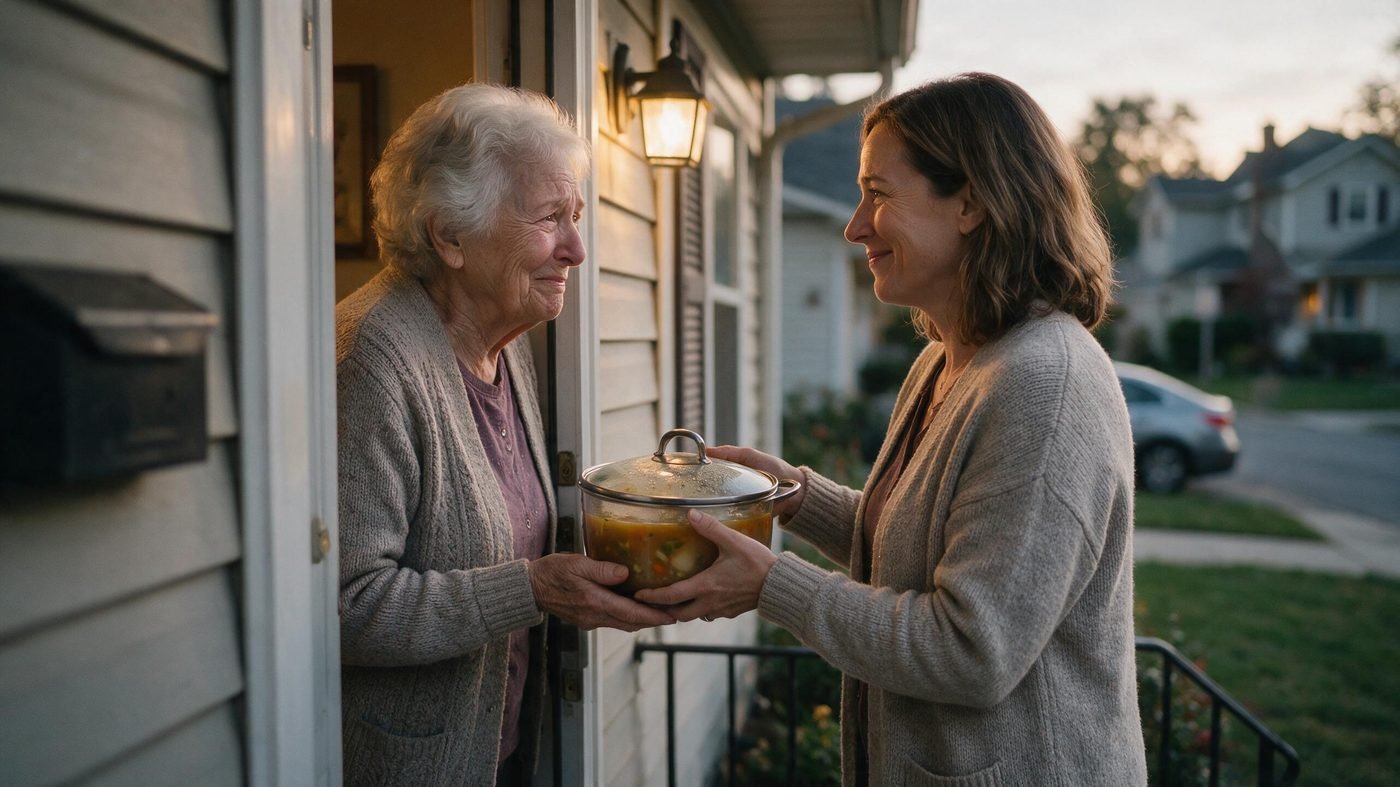
The Front Porch Effect
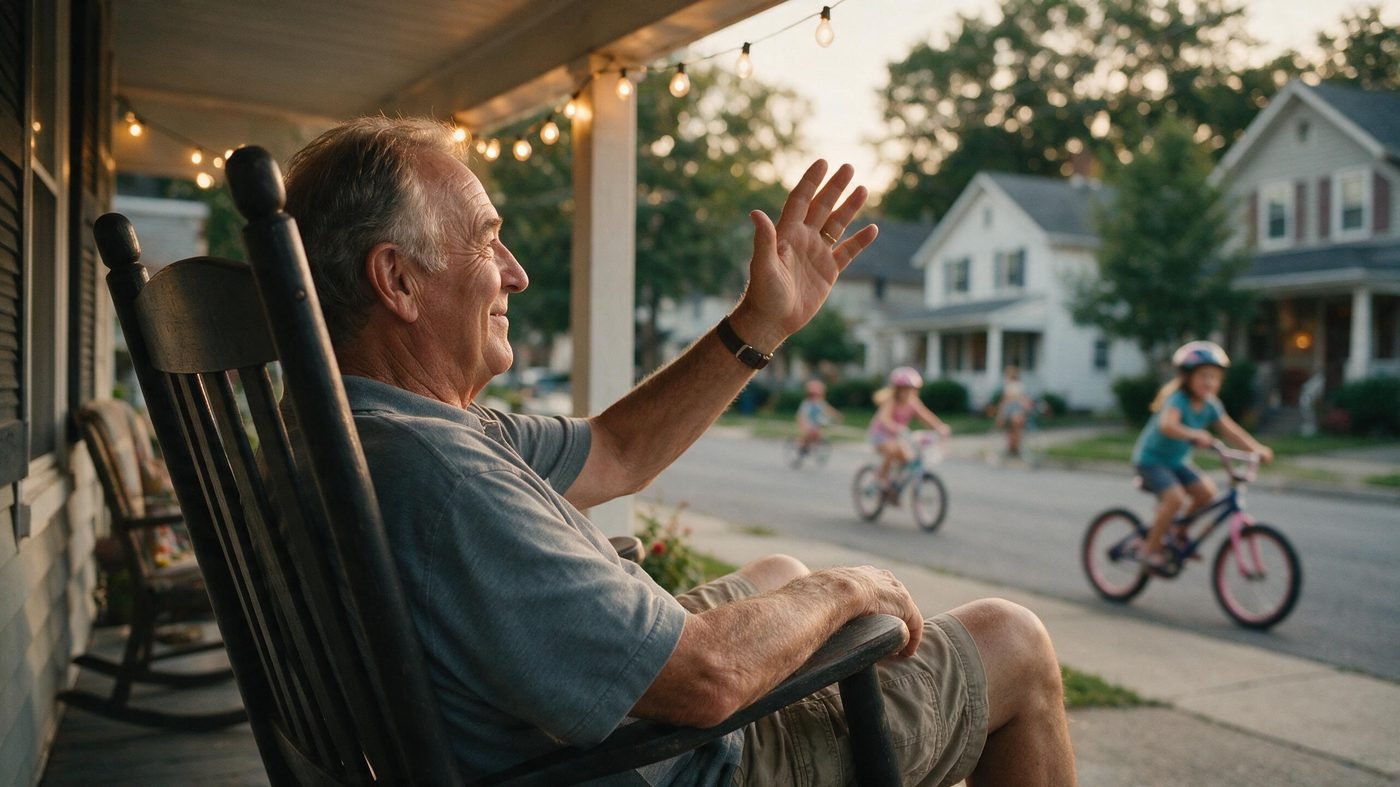
A porch is not really part of a house. It is part of the street that happens to be attached to a house — a small stage on which a person can be present to their neighborhood without inviting anyone in or going anywhere.
Streets with sitters are different, and everyone can feel it. Kids ride bikes a little farther from home, because a known adult is in view. Dog walkers slow down. Mail carriers wave. A porch-sitter is a lighthouse that runs on iced tea: doing nothing, technically, but reorganizing everything around them into something safer and friendlier.
The porch also solves a problem modern life keeps failing at — how to be available for connection without demanding it. A person on a porch can be greeted or not. Waving costs nothing; stopping to talk is optional; leaving is built in. It is the lowest-stakes social contract in existence, which is exactly why so much neighboring gets done there. The deepest friendships between neighbors rarely start with a dinner invitation. They start with two hundred hellos, one wave at a time.
You do not need a porch to run the experiment. A folding chair in the driveway works. A front step works. The only requirement is being visible and unhurried in the place where your private life meets the public street — and letting the street decide, at its own pace, to know you.