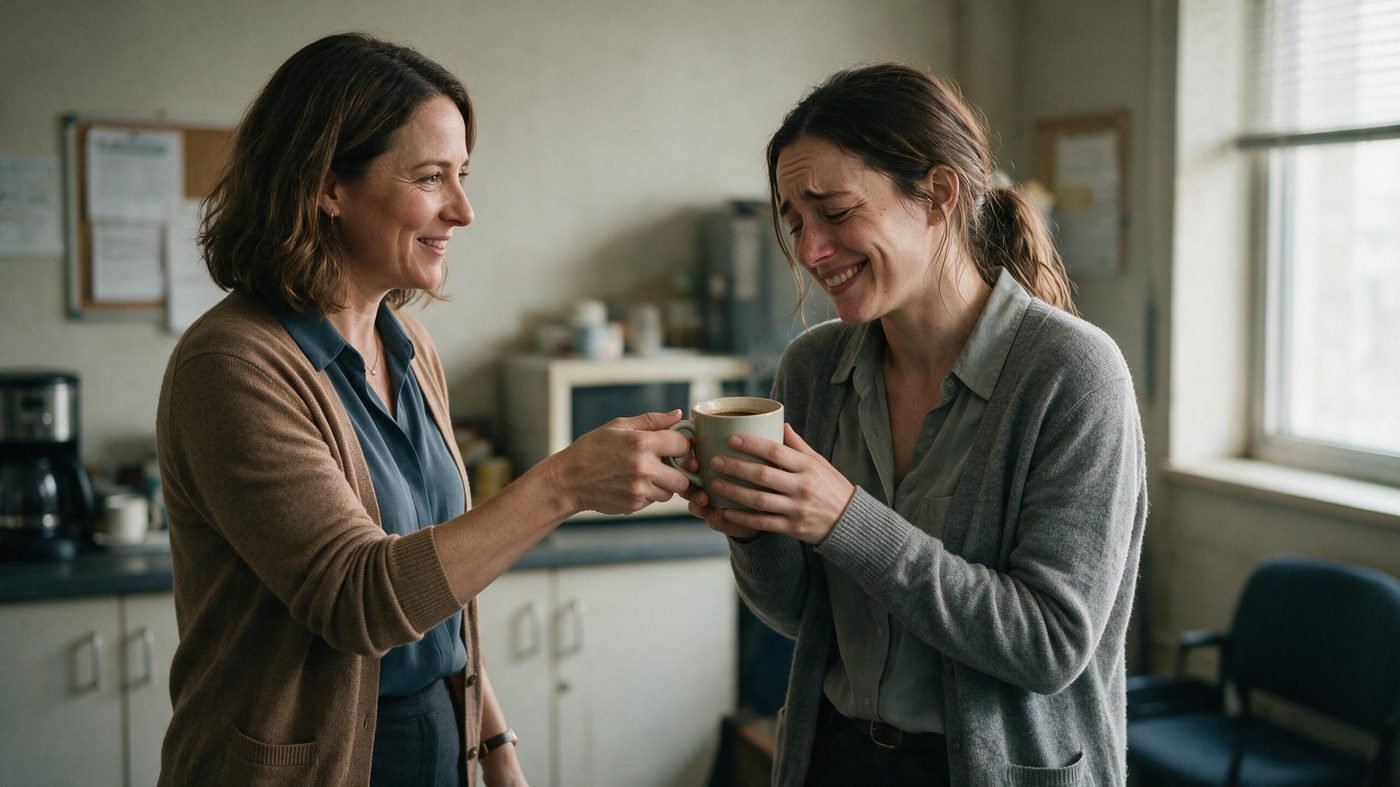
The Quiet Art of Checking In on a Neighbor
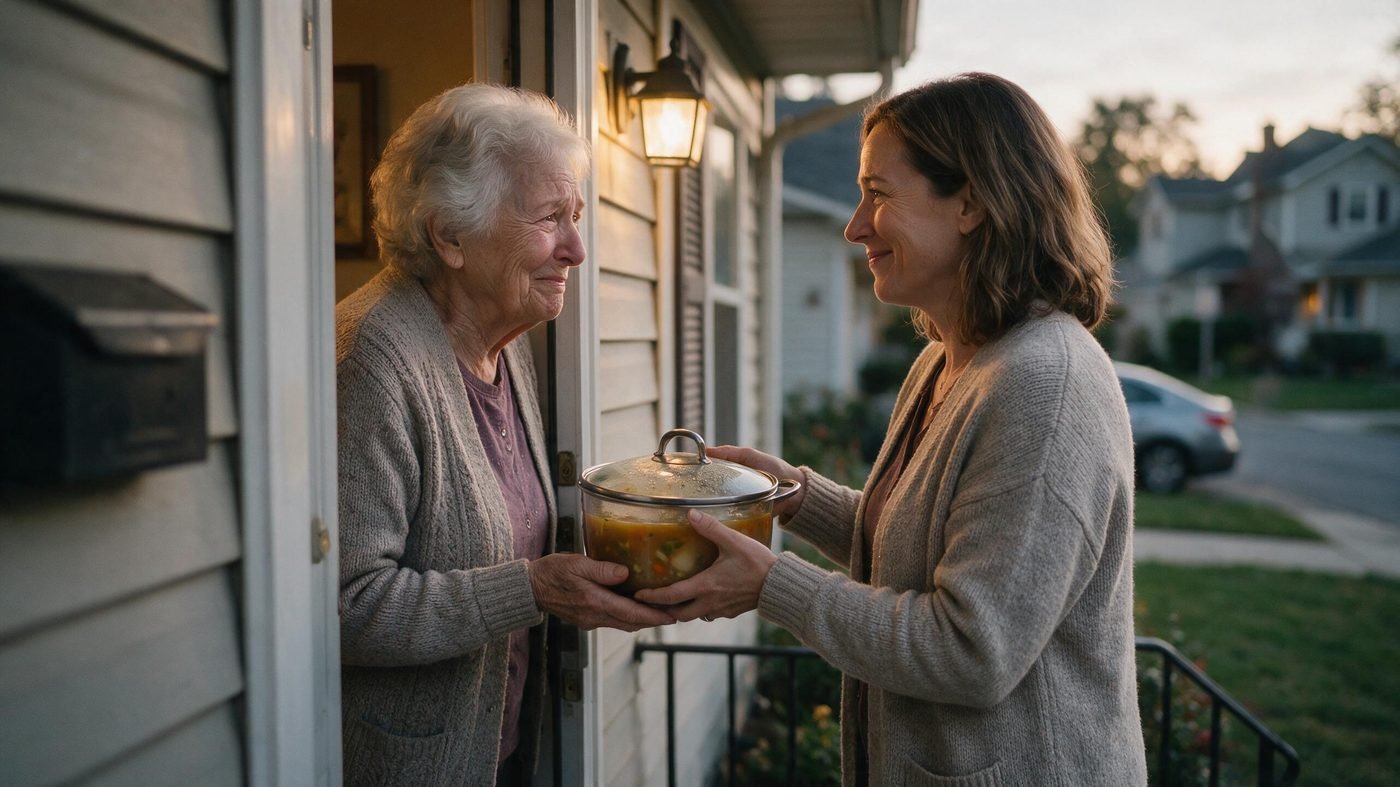
There is a kind of visit that lasts four minutes and changes a whole week. It starts with noticing something small: the porch light that has stayed on for two days, the newspapers piling up, the neighbor you usually see walking at seven who has not walked since Tuesday.
Checking in is a skill, and like most skills it is mostly about lowering the stakes. The best check-ins do not announce themselves as concern. They arrive disguised as an errand — "I made too much soup", "your bin was out, I rolled it back" — so the person being checked on is allowed to be fine. If they are fine, you have lost four minutes. If they are not, you may be the only person that day who noticed.
People who grew up in close neighborhoods often describe the same figure: a woman, usually, who knew when anyone on the street was sick, and appeared with something practical before being asked. Nobody appointed her. That is the point — nobody ever appoints the person who notices. It is a job you give yourself.
The barrier is almost never unwillingness. It is the fear of intruding, of seeming nosy, of knocking on a door and not knowing the second sentence. Here is the second sentence, for the record: "I was thinking about you." No one, in the history of doors, has been sorry to hear it.