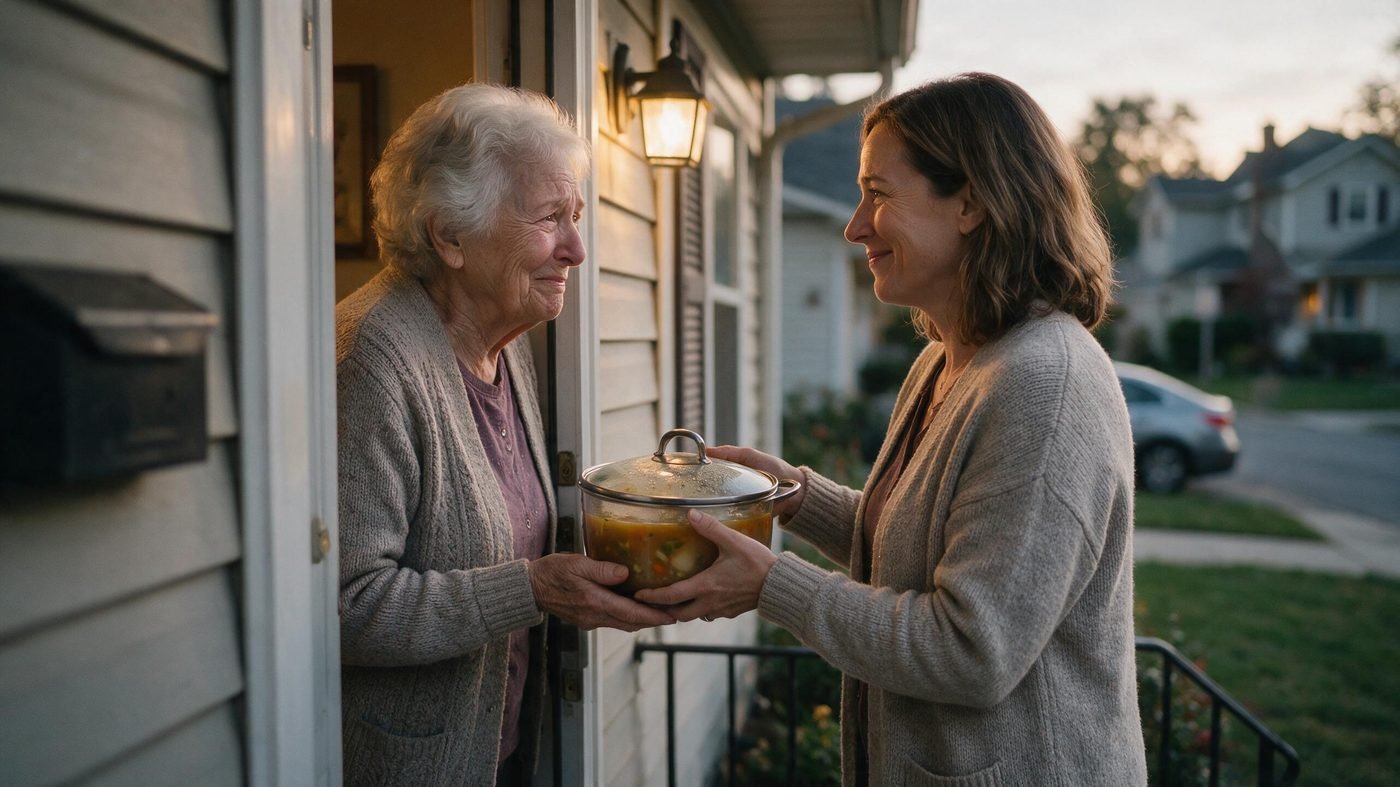
The Little Boxes Where Neighbors Leave Things for Each Other
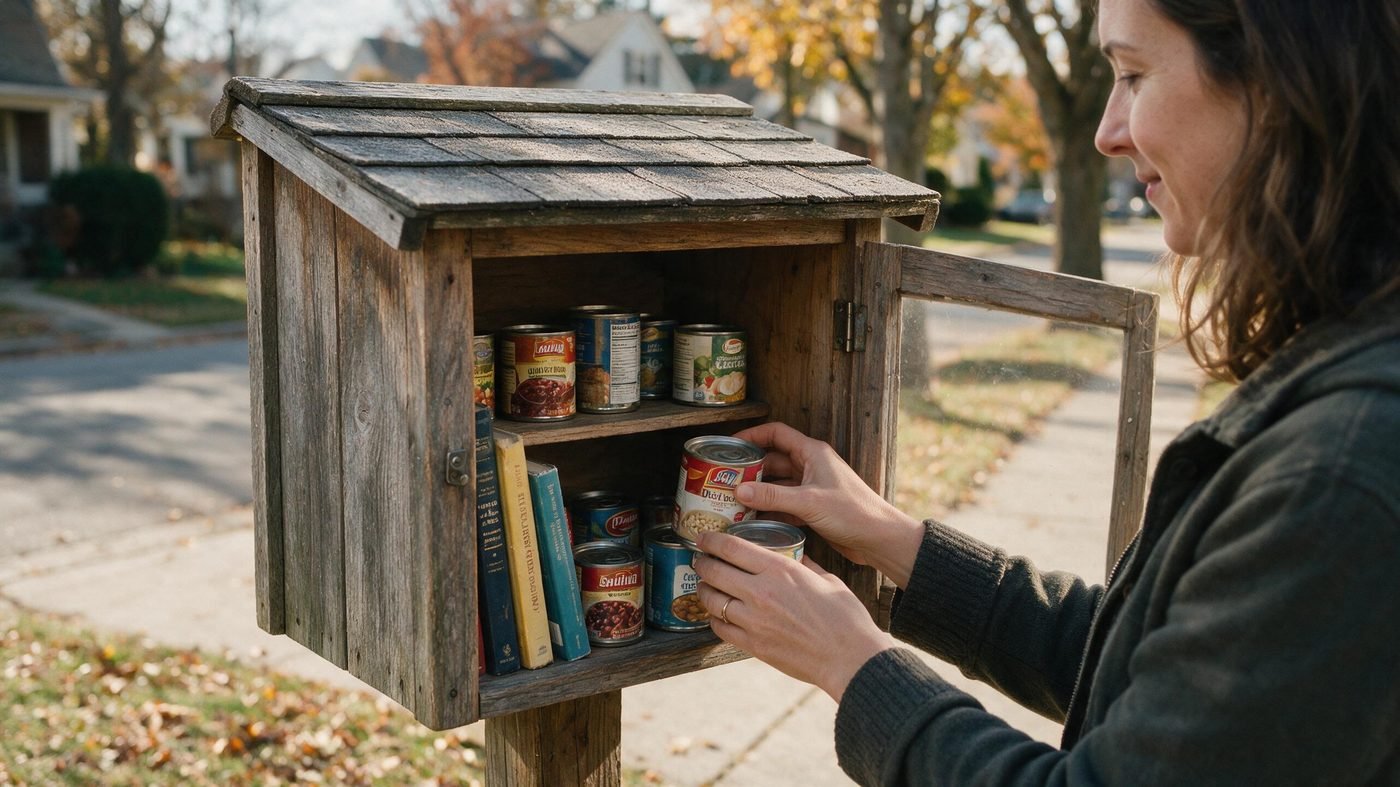
They appear on posts and fences: small weatherproof boxes stocked with books, canned food, sometimes mittens in winter. The sign says some version of "take what you need, leave what you can." There is no lock, no camera, no ledger. By every rule of economics, the box should be empty by Thursday and gone by June.
Instead, the boxes persist — and the strangest thing about them is the direction of the traffic. Ask the people who maintain one and they will tell you the recurring problem is overflow. Neighbors leave more than they take. It turns out that when you build a tiny, judgment-free channel for generosity, you discover how much of it was sitting in people's cupboards waiting for a way out.
The box works because it removes the two most expensive parts of both giving and receiving: ceremony and witness. The giver needs no thanks. The taker needs no explanation. A can of soup moves from a full pantry to an empty one at three in the afternoon with no one watching, and both households are better off — one fed, one lightened.
And a strange thing happens to a street that hosts one. The box becomes proof, standing in public, of an invisible neighborhood: all the people who quietly stocked it. You may never learn which neighbor leaves the peanut butter. But you walk differently past their houses, all of them, knowing someone here does.